

What’s the Healthiest Salad?
The healthiest salad is one that is thoughtfully balanced with nutrient-dense ingredients, including a mix of leafy greens, colourful vegetables, lean proteins and a light dressing, to maximise both nutritional value and flavour while minimising calories. After all, salads aren’t just about greens anymore; they’re a canvas for crafting a nutrient-packed, satisfying meal all in one bowl (or plate!).
When assembling a healthy salad that tastes great, think about each level of the salad. We’ll dive into the elements that make up a nutritious salad powerhouse, from base to toppings to dressings, ensuring you create a culinary masterpiece that’s as good for your body as it is for your taste buds.
The Salad Base
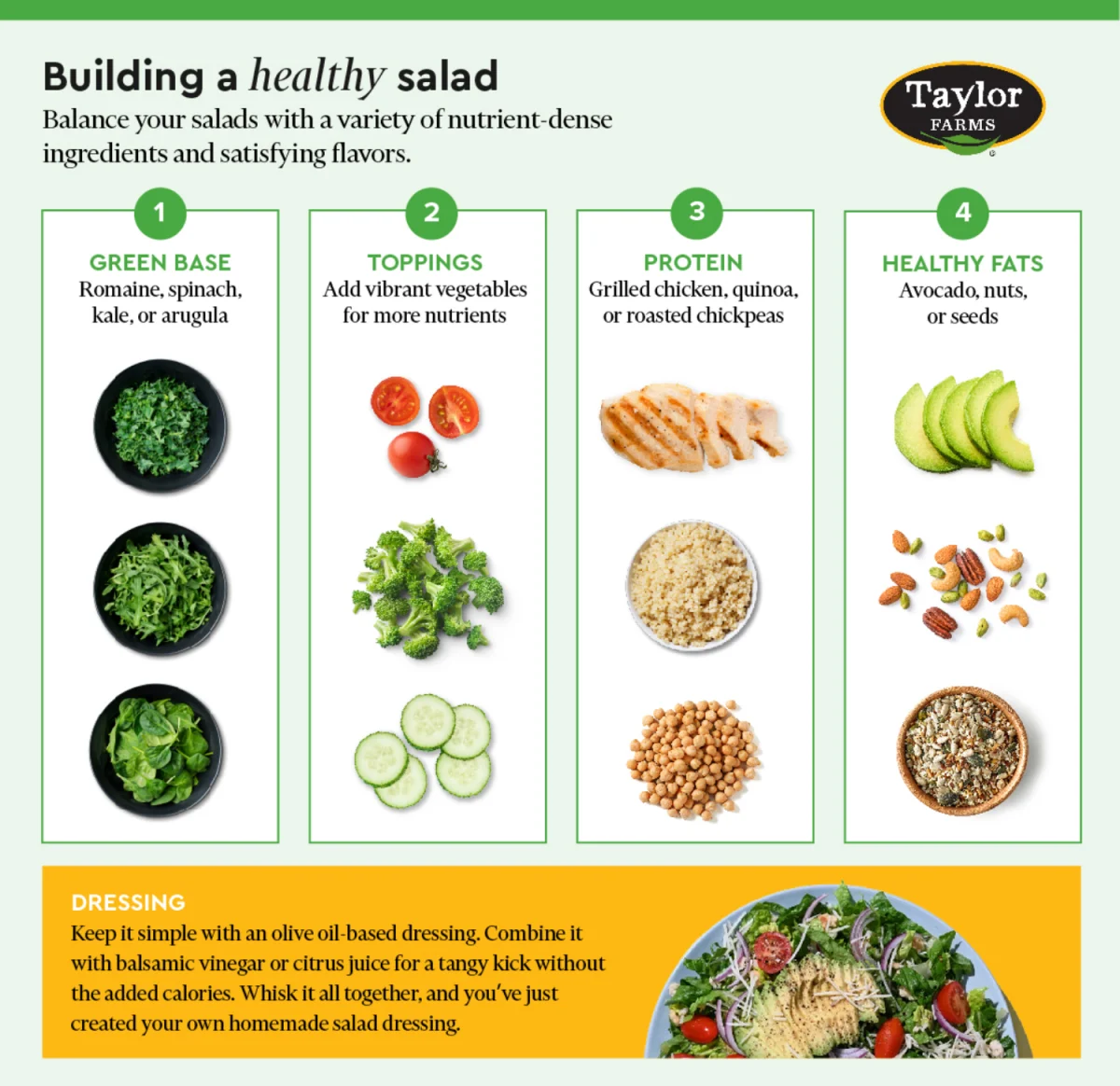
Start your salad with a sturdy foundation of nutrient-rich greens. Opt for dark, leafy greens like kale, spinach or arugula, which are packed with vitamins A, C and K, as well as folate, calcium and fibre. These greens provide a low-calorie base while offering a wealth of essential nutrients to support your overall health.
Add variety and texture by incorporating cruciferous vegetables like shredded Brussels sprouts or thinly sliced cabbage. These veggies are not only low in calories but are also high in antioxidants and fibre, promoting digestive health while delivering a satisfying crunch to your salad.
The Toppings
To elevate your salad’s nutritional profile and flavour, layer it with an array of colourful toppings. In most cases, it’s best to look beyond the usual, more traditional toppings (croutons, tortilla strips, etc.) and experiment with ingredients that offer a variety of nutrients and textures. Here are some crispy, crunchy and nutritious ideas:
Veggies as Toppings
You have a lot of room to work with here! Incorporate an assortment of colourful vegetables such as bell peppers, grape tomatoes, cucumbers and carrots. These veggies are rich in antioxidants, vitamins and minerals, adding vibrant colour and freshness to your salad.
Try experimenting with different cuts of these veggies to hone in on the precise texture you enjoy. For example, diced bell pepper, whole cherry tomatoes, thin-sliced cucumber and shredded carrots all bring different textures that will make each bite more satisfying.
Proteins
Make your salad even healthier by adding some protein to the mix. For a big protein boost, add lean sources such as grilled chicken breast, seared tofu, roasted chickpeas, soybeans or cooked quinoa. These protein-packed ingredients help keep you feeling full and satisfied while supporting muscle health and repair. Sliced steak and salmon are also excellent additions and pair well with lots of different salad flavours.
Healthy Fats
Don’t forget about healthy fats! Yes, this is absolutely a thing. Toppings like avocado slices, nuts and seeds provide essential fatty acids and promote heart health. Avocado adds creaminess and richness to your salad, while nuts and seeds offer a satisfying crunch and a dose of omega-3 fatty acids.
The Dressing
The dressing is the delightful finishing touch that ties everything in the salad together. When possible, opt for homemade dressings made with quality ingredients to avoid added sugars, preservatives and unhealthy fats found in most store-bought varieties.
Don’t know where to start? You can keep it really simple. Consider using olive oil-based dressings infused with herbs and spices. Olive oil is rich in monounsaturated fats, which are known to support heart health and reduce inflammation. Combine it with balsamic vinegar or citrus juice for a tangy kick without the added calories. Whisk it all together and you’ve just created your own homemade salad dressing.
Don’t feel restricted to just oil-based dressings. You can also whip up a creamy dressing using Greek yogurt as a base. Greek yogurt is high in protein and probiotics, which promote gut health and digestion. Mix it with herbs, garlic and lemon juice for a refreshing and nutritious dressing option.
Three Healthy Salad Examples
Need some ideas to build your healthy salad? Use these three salads as your inspiration. Feel free to add your own spin to suit your taste and nutritional preferences or restrictions.
Superfood Salad
- Base: Kale and spinach mix
- Toppings: Quinoa, roasted sweet potatoes, broccoli florets, cherry tomatoes, avocado slices, pumpkin seeds
- Protein: Grilled chicken breast or tofu
- Dressing: Lemon-tahini dressing made with tahini, lemon juice, garlic and olive oil
Mediterranean Chickpea Salad
- Base: Romaine lettuce
- Toppings: Cucumber, bell peppers, red onion, cherry tomatoes, Kalamata olives, feta cheese
- Protein: Oven-roasted chickpeas
- Dressing: Greek vinaigrette made with olive oil, red wine vinegar, garlic and oregano
Asian-Inspired Tofu Salad
- Base: Mixed greens
- Toppings: Shredded cabbage, carrots, snap peas, edamame, mandarin orange segments, sesame seeds
- Protein: Seared, marinated tofu (you can use the dressing below as the marinade)
- Dressing: Sesame ginger dressing with soy sauce, rice vinegar, sesame oil, ginger and honey


